
Roofing for coastal Delaware homes
Shore Home Exteriors replaces, re-roofs and repairs roofs across Rehoboth Beach, Dewey Beach, Bethany Beach and Lewes. A roof three blocks from the Atlantic takes different weather than one in Georgetown, and the differences are specific.
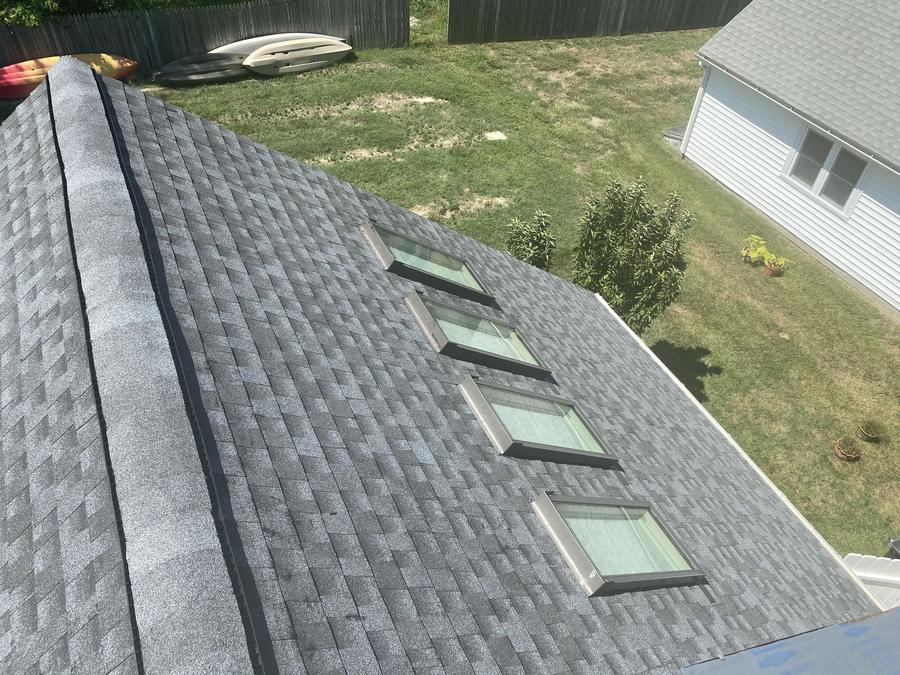
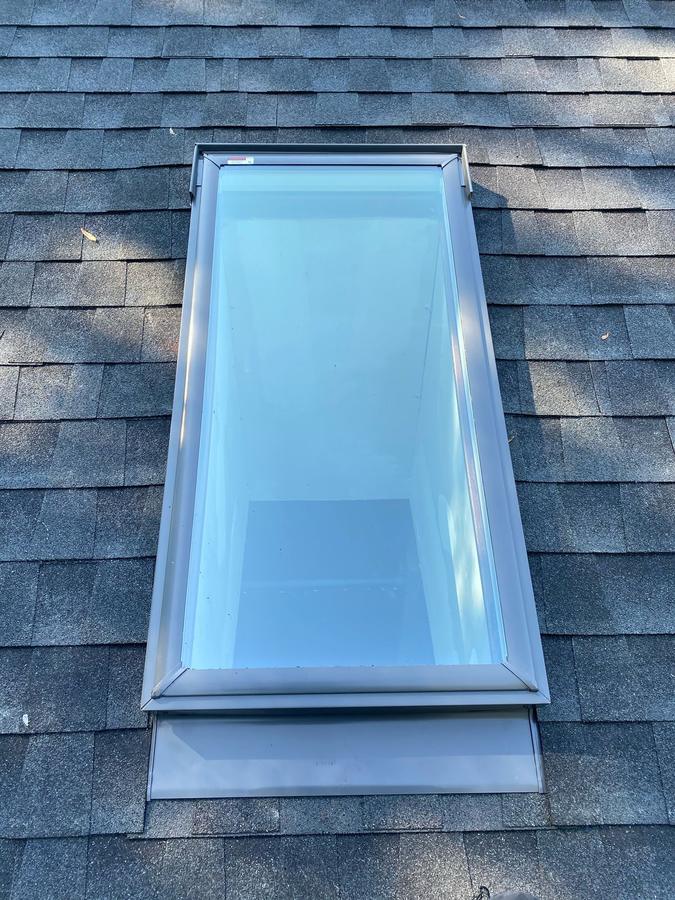
What we do: replacement, repair, skylights
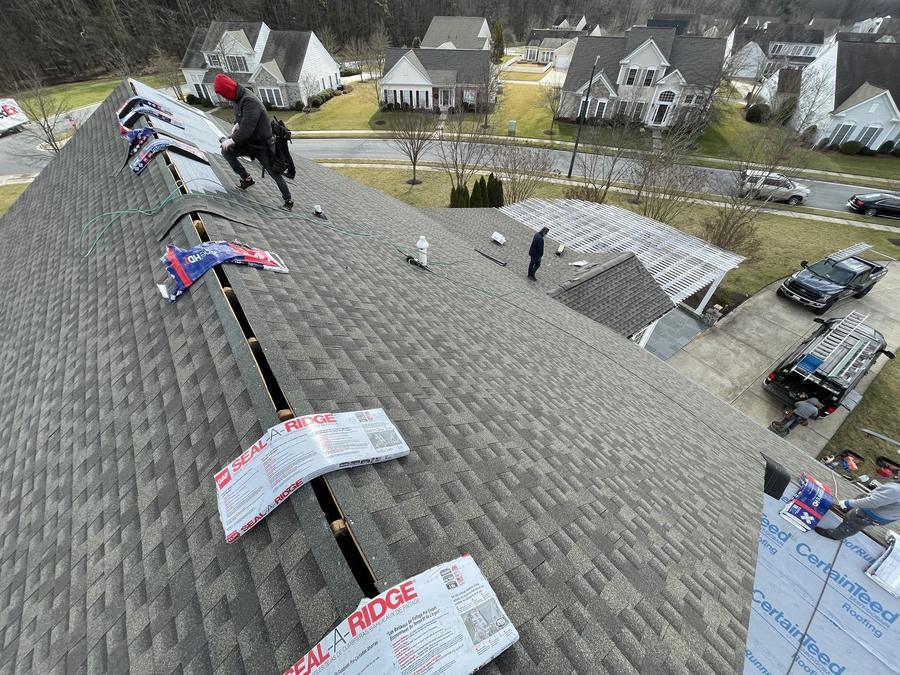
Shore Home Exteriors handles full roof replacement including complete tear-off, re-roofing, roof repair, and skylight installation and replacement. A replacement covers tear-off and disposal of the existing roof, inspection of the decking underneath, underlayment, the shingle or panel field itself, flashing at every penetration and transition, drip edge, ridge, and the intake and exhaust ventilation that lets the assembly dry.
Roofing sits next to several of the other trades we cover. A roof edge meets fascia and gutters; a roof-to-wall transition meets siding; a skylight is a hole in the roof that has to be flashed like one. When those meet-points belong to two different contractors, they tend to become nobody's problem. Doing them under one contractor is the main practical reason to hire a company that covers all eight exterior trades.
How do I know whether my roof needs replacing or repairing?
Repair is the right answer more often than the internet suggests. A roof with one failed flashing detail and twelve sound years left is a repair. The dividing line is whether the problem is local or general.
Signs that point toward repair:
- A leak that shows up in one spot, especially near a chimney, skylight, vent stack or valley. Those are flashing details, and flashing fails long before shingles do.
- A small number of shingles lifted or torn off after a specific windstorm, with the rest of the field intact.
- Damage confined to one elevation or one plane of the roof.
Signs that point toward replacement:
- Granules collecting in the gutters in quantity, with the shingle surface looking thin or shiny where the granules have gone. Granules are the shingle's UV protection; once they leave, the asphalt underneath ages quickly.
- Shingles curling, cupping or cracking across the whole roof rather than in one area. That comes from years of sun and heat, and no single storm causes it.
- Widespread nail pops, or shingle tabs that have lost their seal along entire courses.
- Soft or spongy spots underfoot, or a sagging line along the ridge or between rafters, which means the problem has reached the decking.
- Repeated repairs in different places. Three repairs in three seasons is a roof telling you something.
Age alone is not a diagnosis, but it is context. If a roof is old enough that a repair would be patching into brittle shingles that crack when they are lifted, the repair itself becomes the risk.
What the ocean does to a roof
Four things change on the coast, and they mostly attack the edges rather than the middle of the roof.
Wind uplift concentrates at edges, rakes and corners
Wind does not press down on a roof — it lifts. As air accelerates over a roof edge it creates suction, and that suction is strongest at the perimeter, the rake edges and the corners, which is precisely where a roof is most often started and finished. This is why edge detailing, starter course adhesion, fastener pattern and drip edge matter more on an exposed coastal roof than the brand name on the shingle bundle does.
Salt air corrodes the metal parts and spares the shingles
Asphalt shingles are largely indifferent to salt. The metal in the assembly is not. Airborne salt accelerates corrosion on fasteners, flashing, drip edge, valley metal, vent collars and any exposed steel. A roof can fail at fifteen years with the shingle field still sound, because the flashing behind it rusted through or the fasteners holding it down lost section. On the coast, the fastener and flashing spec deserves as much attention as the shingle choice. It is also why we look hard at the existing flashing during tear-off instead of reusing it by default: step flashing that looks fine from above is often thin on the underside, where it has sat against damp felt for years.
Humidity and ventilation
A long humid season with limited overnight drying puts more moisture into an attic than a drier inland climate does. Intake ventilation at the eaves and exhaust at the ridge are what let that moisture leave. Under-ventilated coastal attics show it as condensation on the underside of the decking, and eventually as decking that has gone soft without any leak ever occurring.
Blowing sand
Close to the beach, wind-carried sand collects in gutters and valleys and holds water where the assembly was designed to shed it.
Materials that survive here
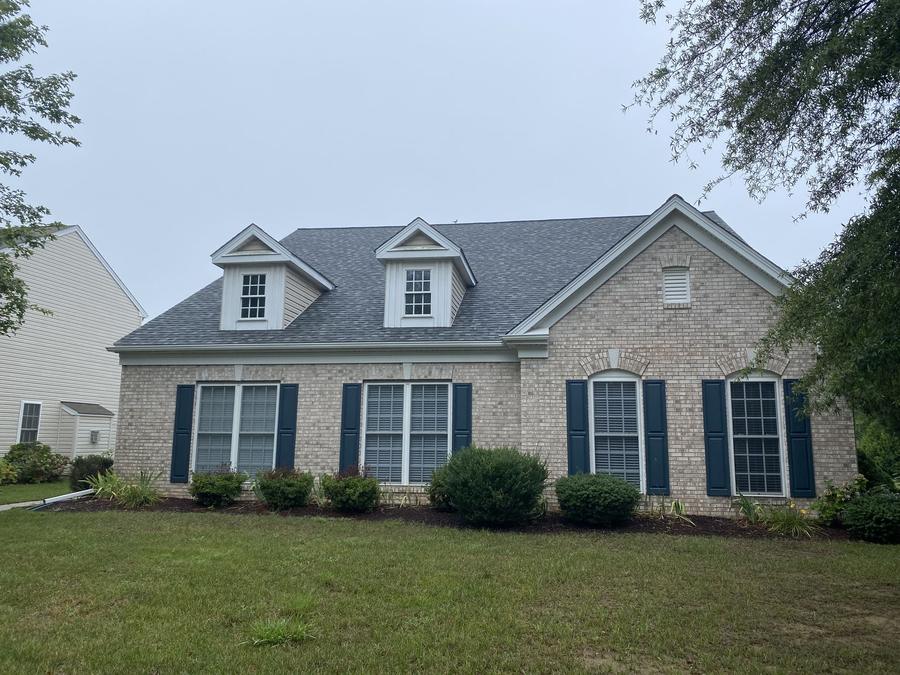
Architectural asphalt shingles are the default for most homes here and they perform well when the edge details and fastening are right. They are repairable, widely stocked, and forgiving of complex roof geometry: dormers, valleys, and the multiple planes common on beach houses.
Metal roofing, standing seam in particular, is chosen for its wind performance and long service life. It costs more up front and it is less forgiving of a complicated roof, but on an exposed elevation it is a serious option. The coastal caveat is that not all metal roofing behaves the same near salt. Coating system and substrate matter, and so does keeping dissimilar metals from touching each other.
Fasteners and flashing decide how long a coastal roof lasts. Mixing metals that sit far apart electrochemically, in the presence of salt and moisture, sets up galvanic corrosion at the contact point, which is why aluminum, steel and copper components need to be chosen as a set rather than one at a time.
On wind ratings: the design wind speed a roof has to be built for in Sussex County varies by location and risk category. The number varies address to address, even within one town. We confirm what applies to your property before anything is ordered. The Sussex County Building Code Office can confirm it independently at (302) 855-7860.
A replacement, step by step
-
On-site look and free estimate
We come out, get on the roof where it is safe to, and look at the things that actually decide the scope: flashing conditions, decking, ventilation, and how the roof meets the siding and gutters. You get a written estimate.
-
Permitting and scheduling
Roofing work in this area generally requires a building permit, and which office issues it depends on whether you are inside town limits. We pull the permit (you don't handle any of it) and we schedule around what your town allows, which in several of these towns is a seasonal question.
-
Tear-off and decking inspection
The old roof comes off and goes in a dumpster. This is the only moment the decking is visible, so it gets looked at then. Soft, delaminated or rotted sheathing is identified and replaced.
-
Underlayment, flashing and field
Underlayment, then the edge and penetration details (drip edge, valley metal, step and counter flashing, vent boots), then the shingle or panel field over them, in that order, so each layer laps the one below and water keeps moving down instead of finding a way in.
-
Ridge, ventilation and cleanup
Ridge cap and exhaust ventilation go on last. Then the site gets cleaned, including a magnet pass for nails, which matters more than it sounds like when the yard is where people walk barefoot.
-
Walkthrough
We go over what was found, what changed from the original scope and why, and what the roof needs from you going forward.
Do I need a permit to replace a roof in Sussex County?
Generally yes. Sussex County lists roofing among the work requiring a building permit, including where structural sheathing is involved or where the material changes (asphalt shingle to metal, for example). If your home is inside one of the incorporated beach towns, the town's own building office is usually the one issuing the permit, and each of the four towns runs its own. Rehoboth Beach also restricts the hours and days construction work may take place, with no Saturday work between May 1 and October 31.
The permit is ours to handle. We pull it as part of the job, whichever office it goes through. The Sussex County permits page covers each office in depth.
Roofing by town
Roofs in these four towns face measurably different exposure, and three of the four towns have their own permitting quirks. We have written each one up separately:
Roofing projects
Roofing FAQ
Does Shore Home Exteriors repair roofs, or only replace them?
Both. Shore Home Exteriors does full roof replacement including tear-off, as well as roof repairs and skylight installation and replacement. A leak in one location, especially around a chimney, skylight or vent, is usually a flashing repair rather than a reason to replace the roof.
Why do coastal roofs fail at the edges and the flashing first?
Wind lifts a roof rather than pressing on it, and the suction is strongest at the perimeter, rake edges and corners, so how the perimeter is built decides more of the outcome than the shingle brand. Salt does the rest: it corrodes fasteners, flashing, drip edge, valley metal and vent collars while leaving the shingles largely alone, which is why a coastal roof often fails at its metal parts before the field wears out.
Do I need a permit to replace a roof in Sussex County, Delaware?
Generally yes, and pulling it is part of what you hire us for. Sussex County lists roofing among the work requiring a building permit, including where structural sheathing is involved or the roofing material changes. Homes inside Rehoboth Beach, Lewes, Bethany Beach and Dewey Beach are usually permitted through that town's own building office rather than the county.
Can a roof be replaced during the summer in the Delaware beach towns?
Depends on the town: Rehoboth Beach allows construction work from 8 am to 5 pm on weekdays but prohibits Saturday work between May 1 and October 31, along with Sundays and holidays, and the other beach towns set their own rules, so confirm the schedule with the town before the season starts.
What roofing materials work best near the Delaware beaches?
Architectural asphalt shingles are the default for most coastal Delaware homes and perform well when edge details and fastening are correct. Standing seam metal is chosen for wind performance and service life. On both, the coastal decision that matters most is the metallurgy of the fasteners and flashing, because dissimilar metals in contact in salt air corrode galvanically.
Have a roof you are unsure about?
Send a couple of photos, or just describe what you are seeing. Most roof questions get a clear answer in one visit, and estimates are free in all four beach towns.