
Deck building for coastal Delaware
New deck construction, deck rebuilds, railings and stairs in composite or wood. Decks near the water live a hard life, and what decides how long one lasts is the framing and hardware under the boards, not the surface you can see.
Our deck work
Shore Home Exteriors builds new decks, rebuilds existing ones, resurfaces decks where the framing underneath is still sound, and installs railing and baluster systems, stairs and landings. We work in both composite and wood.
Resurfacing deserves a note, because it is the option people most often do not know exists. If a deck's joists, beams, posts and ledger are sound, replacing only the decking and railings is a real and much smaller project. Whether that is honest advice or wishful thinking depends entirely on what the framing inspection finds. On the coast, the framing is exactly where the damage tends to be.
Where coastal decks fail
Decks rarely fail because the boards wore out. They fail at connections.
The ledger, and its flashing
The ledger board is the piece bolting the deck to the house, and the ledger connection is the single most common serious deck failure in the country. Two things go wrong: it is fastened inadequately, or (far more often) it is not flashed properly, so water runs down the house wall, sits behind the ledger, and rots both the ledger and the house's rim joist behind it. That damage is invisible from the deck surface. A deck can look perfect and be attached to compromised framing.
Near the water, with wind-driven rain hitting walls hard and often, ledger flashing stops being a nicety. It is the detail we look at first on any existing deck.
Hardware corrosion and galvanic action
This is the coastal issue that catches people. Modern pressure-treated lumber uses copper-based preservatives. Copper in contact with ordinary galvanized steel, in the presence of moisture and salt, drives galvanic corrosion — the steel is consumed. Joist hangers, structural screws, bolts, post bases and railing connectors all have to be specified for both the treated lumber and the salt environment. Get it wrong and the fasteners corrode inside the frame with no visible warning.
This is why hardware for a coastal deck gets specified up front, with the lumber, because the wrong hanger fails where nobody can see it. It is a big part of why two decks that look identical can have very different lifespans.
Posts, footings and standing water
Sandy coastal soil, a high water table and salt all affect what happens below grade. Posts that sit in trapped water, or footings sized for a different soil, are a long-term problem. So is any detail that lets water pond on top of a beam or inside a post base rather than draining away.
Sun and salt on the surface
Full southern and western exposure with reflected light off water is hard on any decking. Wood grays and needs recurring maintenance; composite handles UV and moisture better but is not maintenance-free, and darker composite colors get hot underfoot in a place where people are barefoot.
Composite or wood: which is right for a beach house?
There is no universally correct answer, so here is the trade-off.
Composite and PVC decking do not rot or splinter, never need staining, and hold up well against moisture and UV. They cost more up front. They can get hot in direct sun, and color choice is a bigger deal at the beach than it is inland. For a second home or a rental where nobody is going to be sanding and sealing every other spring, the maintenance argument is strong.
Wood (pressure-treated, cedar or a hardwood) costs less up front, can be repaired board by board, and some people simply prefer how it looks and feels. It requires ongoing cleaning and refinishing, and salt water shortens the interval between refinishes.
The point that matters more than either: the decking material and the framing material are separate decisions. A composite surface over an under-specified frame is a good-looking deck with a short life, because most of the cost that determines lifespan sits in the framing under the boards.
What does a new deck cost in coastal Delaware?
We do not publish prices, because a deck price that is not based on your specific site would be a number nobody can stand behind. What we can do is tell you what moves it, so you can read any estimate, ours or anyone else's, with your eyes open:
- Height off the ground. A ground-level deck and an elevated second-story deck are different structures. Height drives post and footing sizing, bracing, stair runs and the amount of railing.
- Footings and soil. What has to happen below grade is site-specific and is often the least visible part of the cost.
- Decking and railing material. Railing systems in particular vary enormously in price, and on a deck with a lot of perimeter, railing can rival the decking as a line item.
- Stairs. Stairs are disproportionately expensive per square foot, and every additional run adds framing, railing and labor of its own.
- Shape. A simple rectangle costs the least; angles, curves, multiple levels, wrapped corners and picture-frame borders all add labor.
- Beyond those, the number moves with what is already there (demolition and disposal of an existing deck, plus any rot repair discovered at the house wall once the old ledger comes off) and with permitting and site access, since some coastal sites are simply harder to get materials into and some jurisdictions require more process than others.
Estimates are free. If you want a real number, the fastest route is to send us the details or call. A ten-minute conversation about height, size and materials gets you far closer than any online calculator will.
Do I need a permit to build a deck in Sussex County?
Yes. Decks and porches are listed among the work requiring a Sussex County building permit. A few specifics worth knowing before you design anything:
- Sussex County's guidance lets an unenclosed deck, steps, porch or platform encroach 5 feet into the front yard setback and come to within 5 feet of rear and side property lines; add a roof, an awning or an enclosure and the allowance disappears and the full setbacks apply. That five-foot rule decides more deck layouts than any budget does, so it belongs in the conversation before anything gets drawn.
- Projects disturbing 5,000 square feet or more trigger a Sediment and Erosion Control Plan requirement.
- If your property is inside one of the beach towns, that town's building office generally issues the permit and may apply its own setback and lot-coverage rules.
- If your property is close enough to the beach to sit near the DNREC Building Line, a deck may need a DNREC letter of approval or a full coastal construction permit. Cantilevered decks are specifically named in DNREC's letter-of-approval category.
Handling the permit is part of the job for us, whether county, town or DNREC governs your address. The Sussex County permits page goes through each office in depth.
Decks by town
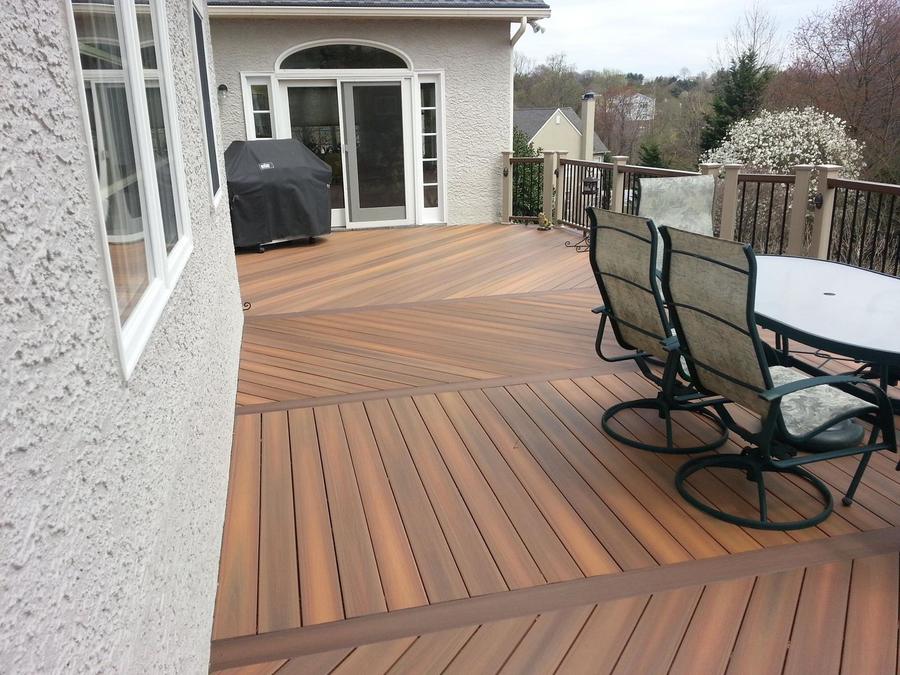
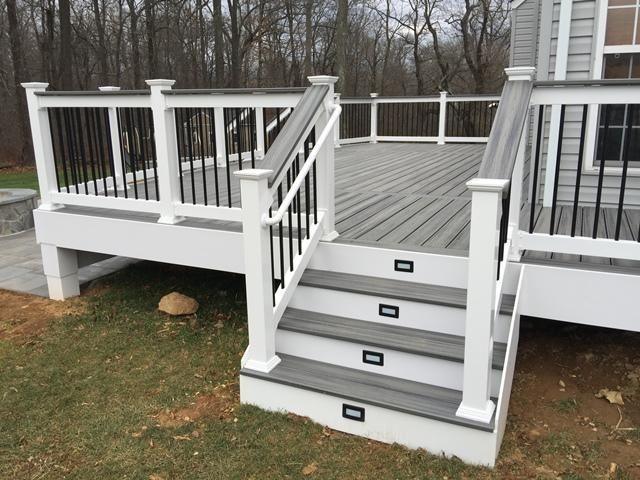
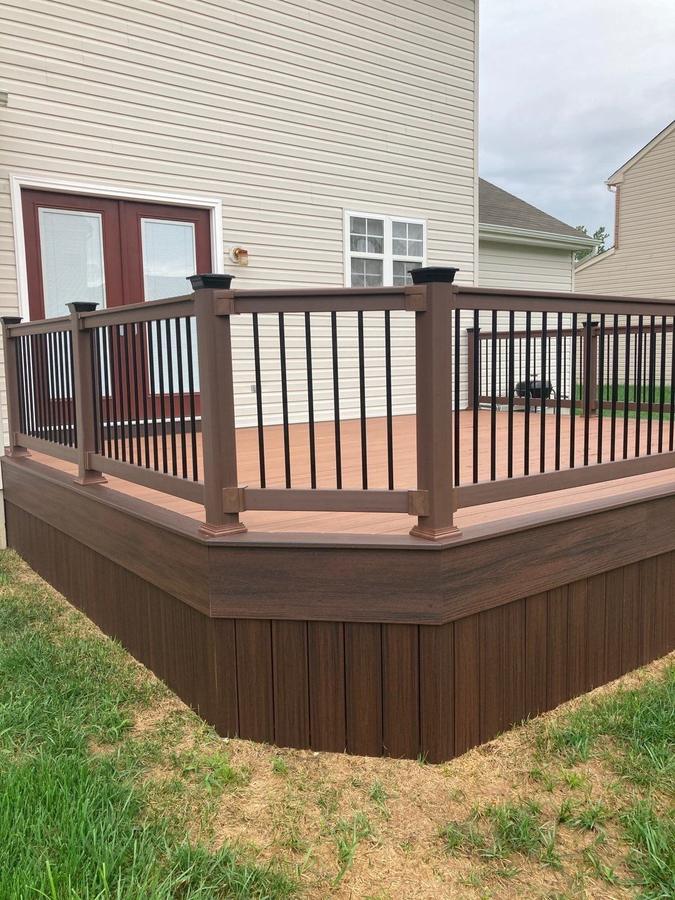
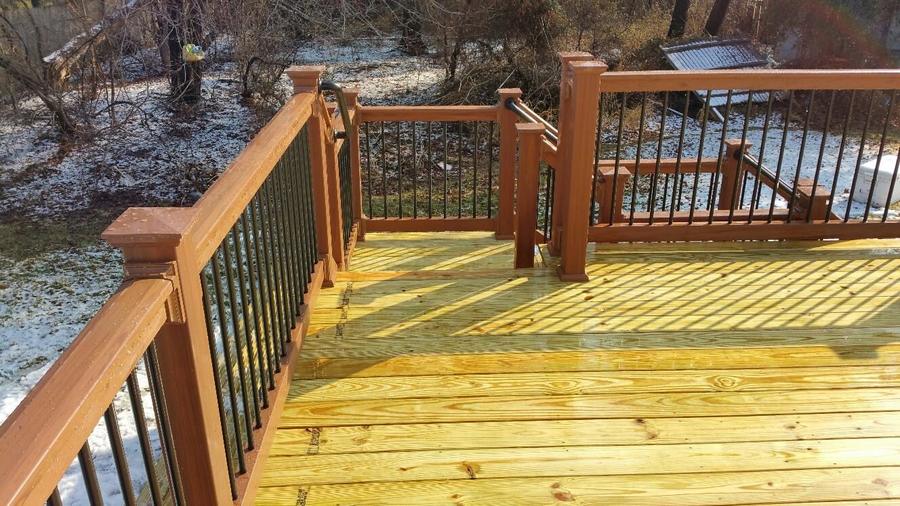
Deck projects
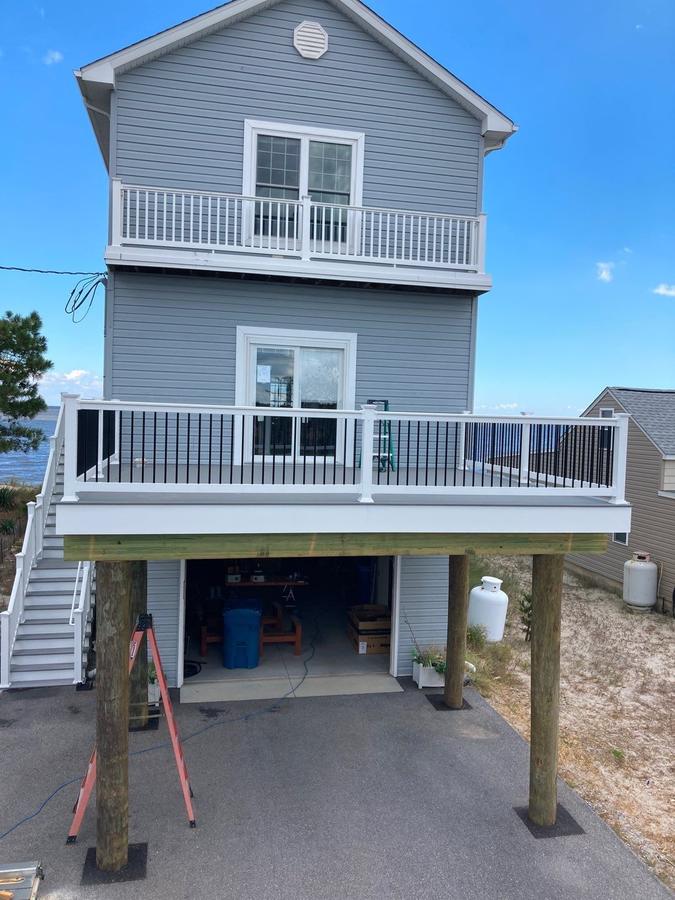
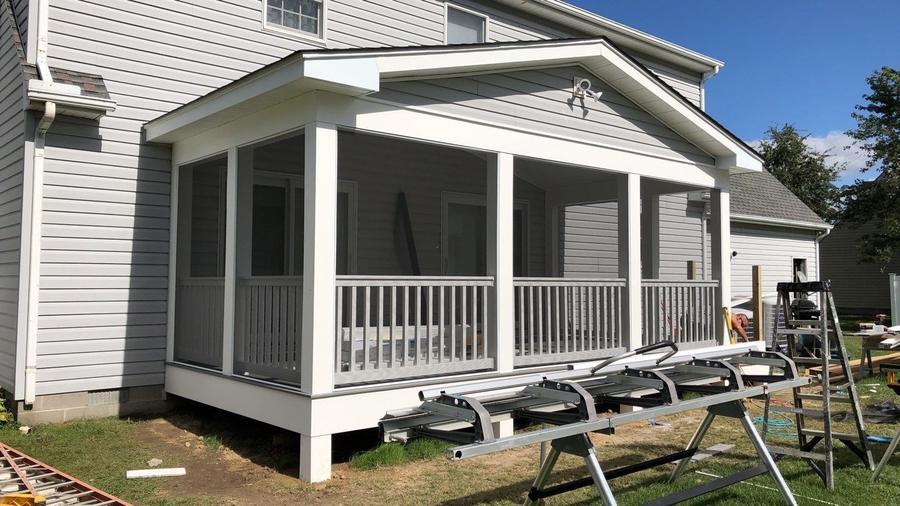
Deck FAQ
What is the most common cause of deck failure?
The ledger, where the deck bolts to the house. Either it was fastened badly or, more often, it was never flashed right, so water sits behind it and rots the ledger and the rim joist inside the wall. None of that shows from above, which is why decks that look fine still fail there.
Why does deck hardware corrode faster near the beach?
Pressure-treated lumber uses copper-based preservatives, and copper in contact with ordinary galvanized steel in the presence of moisture and salt drives galvanic corrosion that consumes the steel. Joist hangers, structural screws, bolts, post bases and railing connectors on a coastal deck have to be specified for both the treated lumber and the salt environment.
Can I replace just the deck boards instead of the whole deck?
Yes, if the joists, beams, posts and ledger pass a framing inspection; on the coast the framing is usually where the damage is.
Is composite decking better than wood at the beach?
Composite and PVC decking do not rot or splinter and need no staining, which matters at a second home or rental where nobody will refinish it each spring. Wood costs less up front and can be repaired board by board but needs more frequent maintenance near salt water. The more important point is that the decking material and the framing specification are separate decisions, and the framing is what determines lifespan.
What are the permit and setback rules for a deck in Sussex County?
A permit is required; decks and porches are listed among the work needing a Sussex County building permit, and we handle the filing as part of the project. On setbacks, the county lets an unenclosed deck, steps, porch or platform encroach 5 feet into the front yard setback and sit within 5 feet of rear and side property lines, an allowance that ends once the structure has a roof or awning or is enclosed. Properties inside Rehoboth Beach, Lewes, Bethany Beach or Dewey Beach are generally permitted through that town's building office and may face the town's own setback and lot-coverage rules, and a property near the DNREC Building Line may additionally need a DNREC letter of approval or a coastal construction permit; cantilevered decks are specifically named in DNREC's letter-of-approval category.
Thinking about a deck?
Send a couple of photos of the space and the size you have in mind, or just call. Estimates are free anywhere from Lewes down to Bethany.